Do you have osteoarthritis in your back? Or perhaps a severe disc herniation? In such cases, a spinal fusion operation is sometimes the best and only solution to reduce the pain. Read about the symptoms of osteoarthritis and how we ensure you receive safe treatment.
You have probably experienced back pain before. In fact, many Danes experience this pain during their lifetime. Fortunately, back pain is usually not dangerous, and it often goes away on its own.
But at other times the pain can persist, which can be incredibly burdensome for you in your daily life. Perhaps you yourself experience pain and stiffness in your lower back when you start to move? The cause may be a so-called degenerative spinal disease – for example, spinal stenosis and spondylarthrosis, which in everyday language is also called “osteoarthritis in the back”.
The treatment can be conservative with physiotherapy, but you may also need a spinal fusion operation. We have extensive experience in both. At CPH Privathospital, we have dedicated consultant specialists and professionals who are up to date with the latest knowledge and with a good deal of experience behind them.
Here you can receive professional operation, treatment and rehabilitation for osteoarthritis in the back. Do you have questions about our pathway, or would you like to have your symptoms of osteoarthritis examined more closely? Contact us for examination or treatment here.
Why do you get osteoarthritis in the spine?
With osteoarthritis in the back, cartilage and tissue around the joints are gradually destroyed. Symptoms can, for example, be soreness and stiffness in the lower back, possibly also in the back and neck, when you move them, or after you have rested.
There can be several causes of arthritis in the back; for example, weak muscles and heavy stress on joints over time can be among them. Often it is a matter of age-related wear that develops slowly over time, but the changes can also be congenital or due to late effects after a back injury.
Your spine consists, among other things, of individual vertebrae that form joints with each other through the intervertebral disc, discus, and through two facet joints. Over time, changes can occur in these joints that cause pain when you move or have been resting. This can affect both your functional pain, mobility and quality of life.
A spinal fusion operation – also called stabilising spine surgery – can often help and reduce the pain. The operation does not completely remove the problem. However, it can help you regain your quality of life. Read more about our spine surgery procedures, where you can also receive treatment for, among other things, lumbar disc herniation.
Discover symptoms of osteoarthritis in the back
You may not necessarily experience signs of osteoarthritis. However, both joint degeneration and osteoarthritis contribute to chronic pain in the lower back, and in many cases the pain radiates into the legs. This is partly because the nerves in the back do not have the space they normally have under normal circumstances.
Therefore, many people experience the symptoms as discomfort and stiffness in the body. If there is also pressure on a nerve, you will experience pain in the back and often also in the legs, so that you cannot walk as far at a time.
You may also experience that the pain is worst when the affected joint needs to get going after a break, but that your pain disappears when the joint has warmed up. The pain also typically returns if the joint becomes overloaded.
The following symptoms can be signs of joint degeneration or osteoarthritis in the spine:
- Pain in the lower back
- Pain radiating down into the legs
- Heavy and tired legs when walking
- Reduced walking distance
- Relief when you bend forward
Are you experiencing one or more of the above symptoms? Then we recommend that you contact a doctor specialising in spinal disorders. That way you can better find the cause of your pain and receive the right treatment.
A spinal fusion operation with experienced specialists
Some of us can easily live with osteoarthritis, while others experience severe pain.
If you tend more towards the latter, you may therefore need a spinal fusion operation. With this, our specialists attempt to stabilise a larger or smaller part of the spine, so that you can reduce your persistent back pain.
The operation is performed under general anaesthesia, where our experienced surgeon makes an incision over what is called the spinous processes in the lower back. During the operation, the surgeon removes the spinous process and the vertebral arch on the vertebrae that have slipped apart. This creates space in the spinal canal and for the nerve roots. Finally, screws and rods may be inserted between the vertebrae to further stabilise the spine.
All of this, however, is thoroughly reviewed by the surgeon with you in connection with the preliminary examination and planning of the pathway.
At CPH Privathospital, we take time for personal dialogue. We want you to feel safe before, during and after the spinal fusion operation. In addition, the same experienced consultant will follow you throughout the entire pathway. Read more about our speciality in spine surgery procedures here.
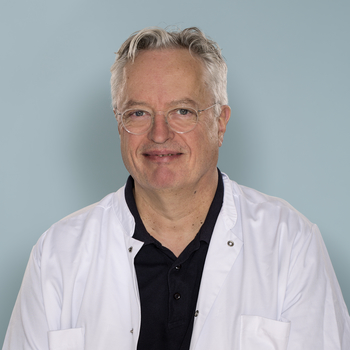
Meet our spine surgeon
We are a team consisting of consultants, nurses and medical secretaries.
We all have many years of experience within the different specialities and we are ready to help you